
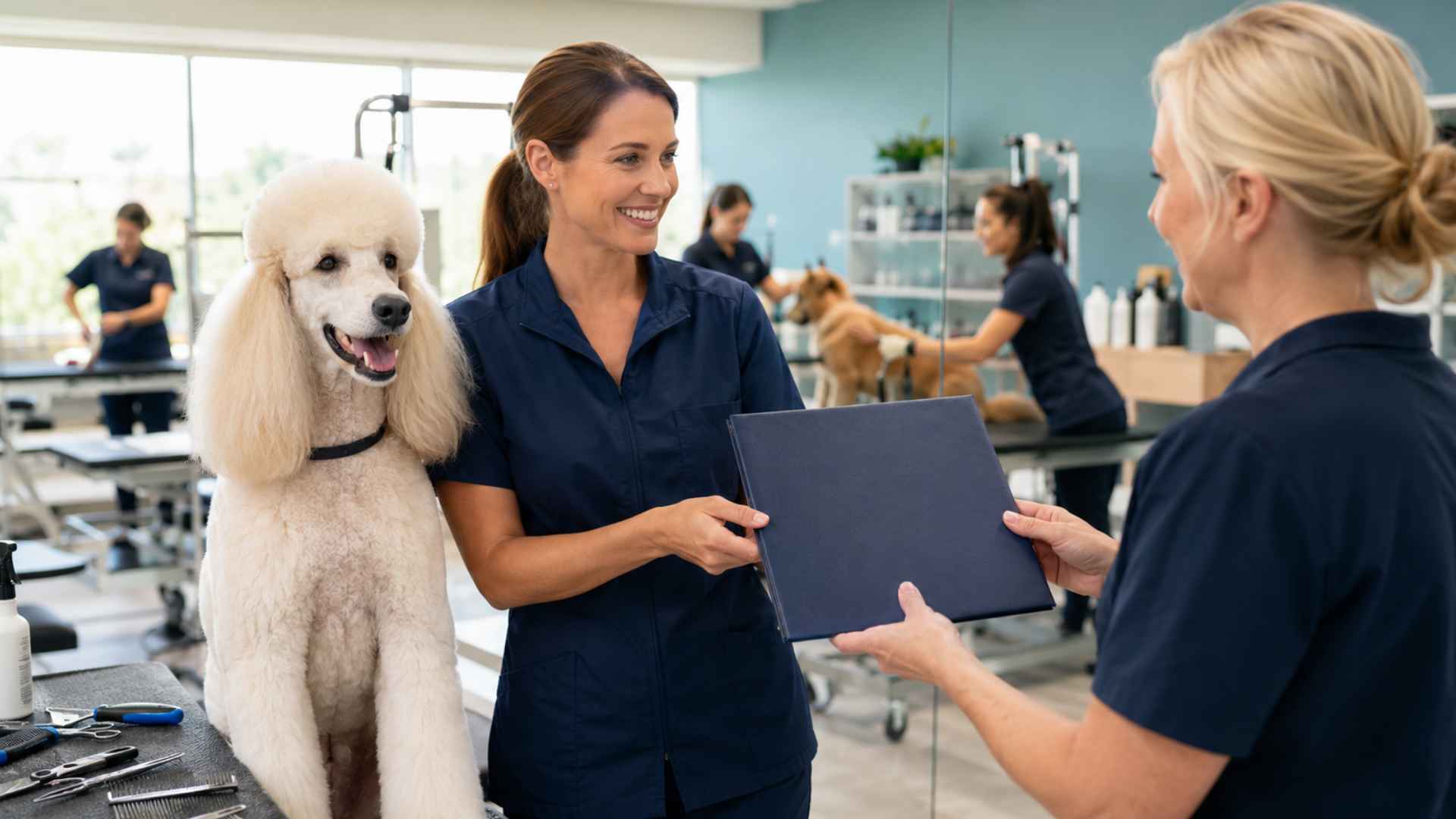
A safe grooming salon is not created by a single rule posted near the tub. It is created by dozens of small decisions made consistently: how pets enter and leave, where wet towels are placed, how tools are stored, when equipment is inspected, how chemicals are labeled, what happens when a dog becomes distressed, and how an incident is reviewed. Because grooming combines animals, water, electricity, sharp tools, noise, chemicals, lifting, and repetitive motion, the salon needs a system rather than a collection of reminders.
A salon safety system should include clear communication about handling limits and service changes so staff and owners understand when an appointment needs to be modified or paused.
The goal is not to eliminate every possible risk. No animal-care workplace can promise that. The goal is to identify foreseeable hazards, reduce them, train people to respond, and improve the system when new information appears. That approach protects pets, employees, clients, and the long-term health of the business.
Start with the flow of the appointment
Risk assessment is easiest when the team follows the pet’s journey. Begin at arrival. Could a dog slip a collar in the parking area? Can two reactive dogs meet at the front desk? Is the reception gate secure? Does the check-in process capture medical concerns, recent surgery, seizures, allergies, bite history, and mobility limitations? Each question reveals a control that can be designed before a problem occurs.
Continue through kenneling, bathing, drying, table work, breaks, and pickup. Look for points where a pet can fall, escape, overheat, become tangled, or encounter another animal. Observe the human side as well: lifting from a low kennel, reaching across a wide tub, standing on a wet floor, or using scissors while rushing. A salon map marked with hazards often reveals patterns that are difficult to see when everyone is focused on finishing the day’s schedule.
Use a simple hierarchy of controls
When a hazard is found, the strongest response is usually to remove it or change the environment rather than depend only on memory. If a damaged cord is present, remove the equipment from service. If staff repeatedly lift heavy dogs, use a ramp, walk-in tub, or height-adjustable table. If the dryer area makes communication impossible, reconsider equipment placement, acoustic treatment, and exposure time.
Policies and personal protective equipment still matter, but they work best after physical risks have been reduced. “Be careful” is weak control. A non-slip floor, maintained equipment, secure restraint point, written handling limit, and trained second person provide more reliable protection. The OSHA ergonomics guidance notes that lifting, bending, awkward posture, forceful work, and repetition are recognized risk factors for musculoskeletal disorders. Those exposures are common enough in grooming that salon design should address them deliberately.
Establish non-negotiable pet-handling rules
Every salon should define handling boundaries. Examples include never leaving a tethered animal unattended, maintaining a hand or safe support on a pet when appropriate, using secure transfers between spaces, and stopping when restraint is escalating fear rather than improving safety. The exact procedures should match the facility, equipment, staffing, and local requirements, but they must be clear enough to train and observe.
Staff should also know who has authority to pause or end a service. A bather who notices abnormal breathing should not feel pressured to continue until a senior groomer becomes available. A groomer who believes a pet is physically or behaviorally unable to tolerate the planned service should have a defined escalation process. Safety weakens when employees think production targets outrank professional judgment.
The salon’s safety, health standards, and OSHA compliance education can help owners and groomers organize this knowledge into a more formal program rather than relying on verbal tradition.
Control slips, falls, cuts, and electrical hazards
Water belongs in the tub, not in walkways. Use slip-resistant surfaces, repair leaks, route hoses to avoid trip paths, and assign immediate cleanup responsibility. “Someone will get it” often means no one does. Keep towels, hair, cords, and mobile equipment out of traffic zones. Good lighting is also a safety control; groomers cannot make precise decisions when shadows hide skin folds, nails, or clipper paths.
Sharp tools should have designated storage. Shears should not rest open on a table, and blades should not be handled casually when hot or damaged. Electrical tools require routine inspection for cord wear, loose connections, heat, unusual noise, and changes in performance. Any questionable tool should be labeled and removed from use until it is repaired or replaced. Electricity, wet hands, and improvised repairs are an unacceptable combination.
Treat chemical safety as a management responsibility
Shampoos, disinfectants, sprays, and other products need their original labels or properly labeled workplace containers. Staff must know correct dilution, required protective measures, safe storage, and what to do after a spill or exposure. Never mix cleaning chemicals unless the manufacturer explicitly directs it. Products marketed as familiar or pleasant-smelling can still create risk when concentrated, aerosolized, or used incorrectly.
Safety Data Sheets should be accessible to employees who need them. OSHA’s Hazard Communication guidance explains the role of labels, safety data information, and training in helping workers recognize and control chemical hazards. A grooming salon should inventory its products, remove unlabeled containers, keep current information, and train staff before exposure—not after an accident.
Chemical procedures should account for animals as well as workers. Follow label directions, prevent pets from licking wet surfaces or concentrated product, and store supplies beyond animal reach. More product is not automatically more effective. Correct concentration and contact time are part of safe use.
Manage noise, heat, and air quality
High-velocity dryers, barking, vacuum systems, and multiple tools can create sustained noise. Salon owners should assess the actual environment rather than assume exposure is harmless because the equipment is common. Reduce noise at the source where possible, maintain equipment, separate noisy functions, rotate tasks, and provide appropriate hearing protection based on a competent assessment.
Temperature and ventilation also require attention. Enclosed drying spaces can become dangerous if poorly designed, inadequately monitored, or used without individual assessment. Pets vary by age, breed, airway anatomy, health, coat, stress level, and ability to regulate heat. Drying procedures must include active observation and clear limits. Ventilation should reduce humidity, odors, airborne hair, and chemical exposure without creating unsafe drafts or spreading contamination.
Build safety into scheduling
Overbooking is a hazard. When the schedule leaves no margin for a frightened dog, equipment problem, late client, or bathroom break, people hurry. Hurrying increases the chance of missed signals, poor body mechanics, unsecured transfers, and tool injuries. Capacity should reflect the mix of pets, staff competence, facility layout, and service complexity—not only the number of appointment slots.
Flag pets that need extra time, a quieter period, a second handler, a floor-level setup, or a modified service. Avoid treating those needs as surprises each visit. A useful appointment record makes the safe plan visible before the pet arrives.
Prepare for incidents before they happen
Every employee should know how to respond to a pet injury, human injury, bite, fire, power failure, severe weather event, loose animal, or medical emergency. Post emergency contacts, keep suitable first-aid supplies, maintain accessible exits, and conduct drills. Assign roles: who secures animals, who calls emergency services or the veterinarian, who meets responders, and who contacts owners.
After an incident or near miss, preserve facts and review the process without beginning with blame. What conditions were present? Which control failed or was missing? Did workload, equipment, communication, or training contribute? What change will prevent recurrence? A near miss is valuable information because it allows improvement before serious harm occurs.
Train, observe, and refresh
A signed policy does not prove competence. Demonstration, supervised practice, and observation are necessary. New staff should show that they can transfer animals, use restraints, dilute products, clean equipment, recognize distress, and respond to emergencies. Experienced employees also need refreshers, especially when products, equipment, or procedures change.
Owners can strengthen the culture by inviting hazard reports and responding promptly. If employees believe reporting a hot blade, damaged dryer, aggressive pet, or painful wrist will make them look weak, risks stay hidden. A strong safety culture treats early reporting as professional behavior.
Make safety visible in daily operations
The best safety program is practical enough to use on a busy Tuesday. Begin each day with a quick environment check. Review special-needs pets. Keep cleaning and inspection logs simple. End with equipment shutdown, sanitation, and notes for the next shift. Schedule a deeper monthly review of incidents, maintenance, supplies, and training needs.
Safety is not separate from excellent grooming. It is the foundation that allows technical skill to be used responsibly. When the facility, schedule, equipment, training, and communication all support the same goal, employees can work with greater confidence and pets receive more consistent care.